

Neck Pain in Tech: Alleviating Discomfort from Screen Time
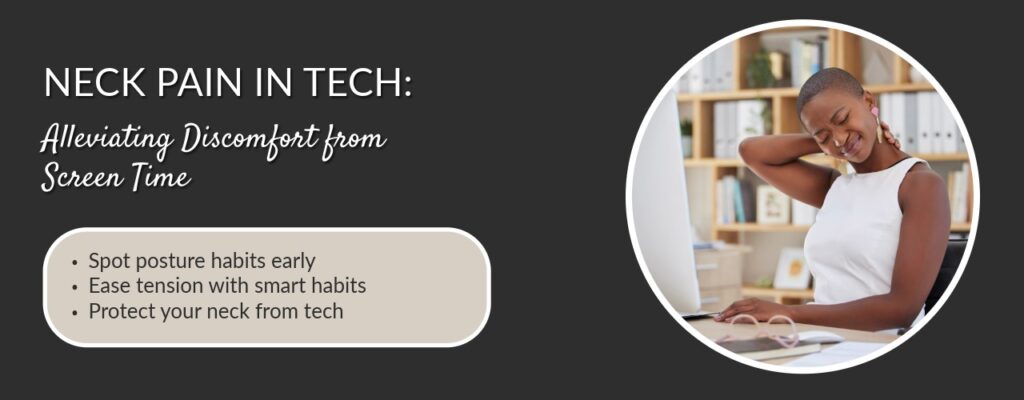
Screen time is hard to avoid, whether you’re working from a laptop, answering messages on your phone, or watching a show to unwind. But with increased device use, many people are noticing an uncomfortable side effect: persistent tension, stiffness, or soreness in the neck. Neck pain in tech has become more common, especially for individuals who spend long hours in front of a screen with little movement.
Understanding why this happens and how to address it can help reduce discomfort and prevent it from becoming a long-term issue.
Tech Tension Builds Over Time
Most people do not realize how often they shift into poor posture while using technology. You might lean forward without noticing, look down at your phone, or slouch at your desk. Over time, these positions can place stress on your neck muscles and joints. Common symptoms of tech-related neck pain include:
- A dull ache near the base of the skull
- Stiffness when turning or tilting your head
- Pain that worsens after a long day of sitting or scrolling
- Discomfort that radiates into the upper back or shoulders
The symptoms are rarely sudden. Instead, they tend to build gradually with repeated posture and movement habits.
Why Neck Pain in Tech Happens So Often
Neck pain in tech usually results from forward head posture and poor ergonomics. When the head shifts forward in front of the shoulders, the neck muscles work harder to support it. That added strain causes fatigue and discomfort, especially when movement is limited throughout the day.
Other contributing factors include:
- Low monitor height
- Long stretches without standing
- Holding the phone below eye level
- Slumping into a soft couch while using a device
A common misunderstanding is that stretching will resolve the issue. While stretching may ease temporary tightness, it does not address the core problems. Lasting relief often requires strengthening weak postural muscles, adjusting your workspace, and changing daily habits.
How Bridge Physical Therapy Treats Neck Pain in Tech
Tech-related neck pain is one of the most common conditions treated at Bridge Physical Therapy. Our team starts with a thorough assessment to understand how your symptoms developed. We look at posture, movement patterns, strength, and joint mobility to create a personalized care plan.
Treatment may include:
- Manual therapy to reduce tension and restore motion
- Targeted exercises that support posture and neck control
- Guidance on workstation setup and positioning
- Education on movement habits and body mechanics
The goal is to reduce pain while helping you move more comfortably during your daily activities. By identifying the root causes and addressing them directly, we help you avoid recurring issues in the future.
Small Changes That Make a Big Difference
Even a few simple adjustments can relieve strain on your neck. Consider trying the following:
- Raise your screen so the top of the monitor is at eye level
- Use a separate keyboard and mouse with your laptop
- Take breaks every 30 to 60 minutes to reset your posture
- Hold your phone at eye level instead of looking down
- Sit with your feet flat, knees level with your hips, and back supported
- Include gentle neck mobility exercises if you feel stiff
These changes are especially helpful when they become part of your routine. The earlier you start, the easier it is to prevent long-term strain.
You Can Feel Better with the Right Support
Neck pain in tech is not something you have to accept as part of modern life. If your symptoms are becoming more frequent or not improving with self-care, it may be time to seek help. The movement specialists at Bridge Physical Therapy can help you address the source of your pain and create a plan that fits your lifestyle.
We will guide you through each step of the recovery process with personalized care that supports both comfort and long-term health. Reach out to Bridge Physical Therapy today to take the first step toward relief.