

How to Recognize the Signs of a Rotator Cuff Tear
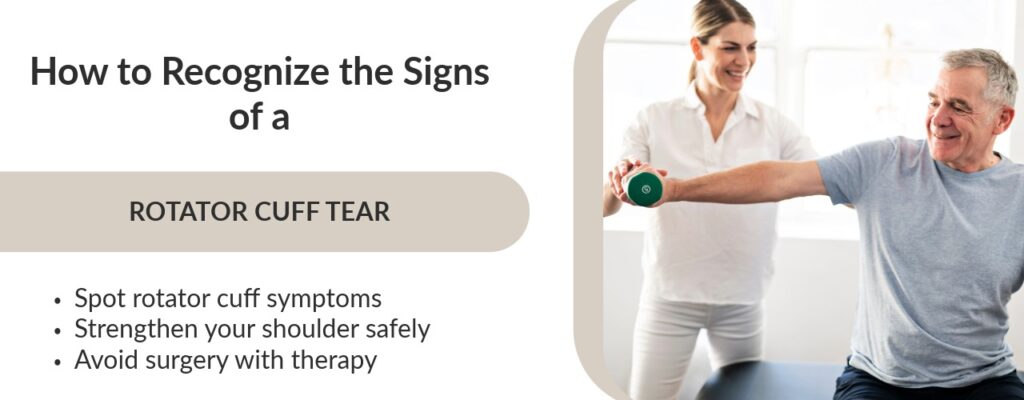
Shoulder pain can be frustrating and limiting, especially when it affects your ability to perform simple tasks, like lifting a bag or reaching overhead. One common cause of persistent shoulder discomfort is a rotator cuff tear.
It’s important to understand rotator cuff tears, why they happen, and what signs to watch out for. That way, if you suspect you have a tear, you can receive timely treatment at Bridge Physical Therapy. That way, our team can help you get back to the activities you love.
Understanding the Rotator Cuff: Why It Matters for Shoulder Function
Your rotator cuff is a group of several muscles and tendons that surround the shoulder joint. They keep the ball of the upper arm bone securely within the shallow socket of the shoulder. This group of muscles plays a vital role in
- Lifting and rotating your arm
- Stabilizing the shoulder joint during everyday movements
- Supporting overall shoulder strength and mobility
When the rotator cuff is partially or completely torn, the joint can lose stability, leading to pain, weakness, and reduced function.
Why Do Rotator Cuff Tears Happen?
Several factors can contribute to a torn rotator cuff:
Overuse or Repetitive Motions
- Common in jobs or sports requiring frequent overhead movement.
Age-Related Wear and Tear
- Tendons naturally weaken over time, making them more susceptible to injury.
Acute Injuries
- A sudden fall or heavy lifting can cause a tear.
Poor Shoulder Mechanics
- Even small imbalances can lead to increased stress on the tendons.
Key Signs of a Rotator Cuff Tear You Shouldn’t Ignore
Knowing the symptoms of a rotator cuff tear can help you decide when it’s time to see the team at Bridge Physical Therapy. Look out for these signs:
1. Persistent Shoulder Pain
- A torn rotator cuff typically causes pain deep in the shoulder and pain that radiates down the arm. It may worsen when lifting the arm, especially above shoulder height.
2. Weakness in the Shoulder
- You might notice difficulty lifting objects, throwing, or performing daily tasks like reaching into cabinets.
3. Limited Range of Motion
- A torn rotator cuff often causes stiffness or an inability to move the arm fully in different directions.
4. Pain at Night
- Many people with a rotator cuff tear experience increased pain while lying on the affected shoulder, disrupting sleep.
5. Clicking or Popping Sensations
- You may notice clicking or popping when moving your arm. While not always painful, this can be a sign of tendon damage.
How Physical Therapy Can Help Treat a Torn Rotator Cuff
Physical therapy is one of the most effective, non-surgical options for managing and recovering from a torn rotator cuff. A tailored program can help reduce pain, restore function, and prevent the injury from worsening. Here’s what to expect:
Personalized Evaluation and Goal Setting
- We’ll begin with a thorough shoulder assessment that evaluates strength, range of motion, and overall function. From there, we’ll create a customized treatment plan focused on your specific needs and activity goals.
Pain Management and Inflammation Reduction
- Techniques such as manual therapy, hot and cold therapy, and other modalities can help reduce pain and swelling, making it easier to move and participate in exercises.
Strengthening and Muscle Re-Education
- Weakness in the shoulder muscles can worsen symptoms. We’ll guide you through targeted exercises to improve rotator cuff and surrounding muscle strength, helping stabilize the joint and protect it from further injury.
Gradual Functional Progression
- As your pain decreases and strength improves, therapy progresses to more functional activities, helping you safely return to the tasks you need for work, sports, and daily life.
Education to Prevent Re-Injury
- Finally, we’ll help you avoid future injuries by showing you safer ways to use your shoulder to minimize the risk of future injuries.
Don’t Wait to Get Help
A rotator cuff tear can worsen over time if left untreated. If you’re experiencing shoulder pain or weakness, don’t wait for it to improve on its own. The sooner you start treatment, the better your recovery potential.
Contact Bridge Physical Therapy today to schedule an initial appointment.